
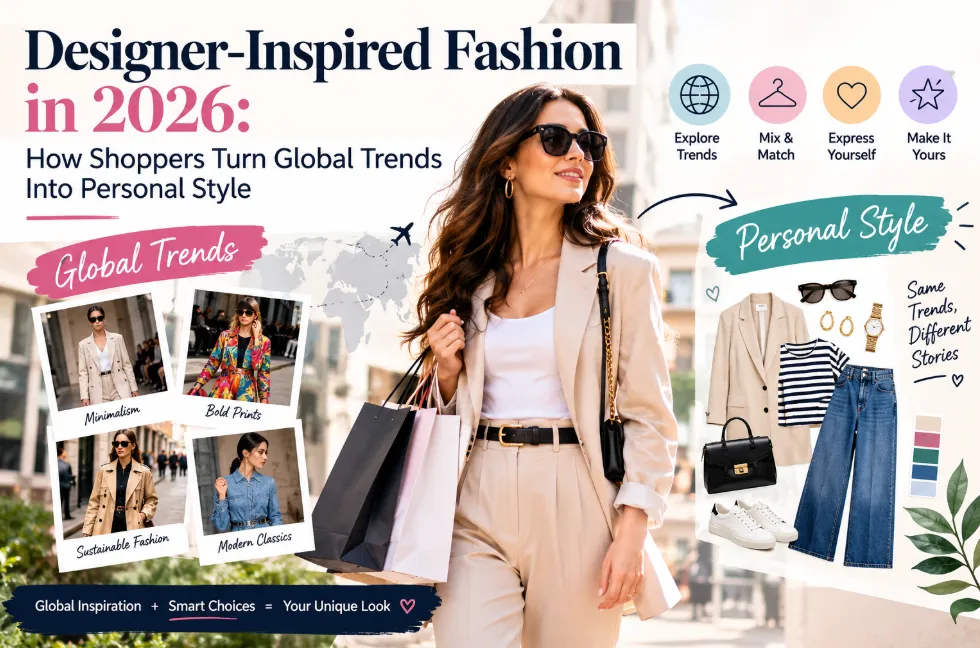
Fashion in 2026 is moving in an interesting direction. Consumers have access to more trends, brands, designers, and products than ever before, yet many shoppers are becoming more selective about what actually enters their wardrobes. The internet has transformed fashion discovery into a global experience. Someone in Seoul can discover a runway look from Paris, compare street-style interpretations from Tokyo, watch a styling video created in London, and search for similar products online within minutes. But greater access does not necessarily mean buying more. Instead, many fashion-conscious consumers are learning how to take inspiration from designer collections and adapt those ideas to their own lifestyles, budgets, body types, and existing wardrobes. This shift from simply following fashion to interpreting fashion is changing the way people shop.
DESIGNER FASHION IS NOW A SOURCE OF IDEAS
Designer collections have always influenced the wider fashion industry. Colors, silhouettes, materials, bag shapes, footwear, and styling techniques introduced by major fashion houses frequently appear in other parts of the market later. What has changed is the speed at which consumers can see these ideas. Runway images circulate almost immediately. Celebrity appearances are shared globally. New bags and shoes can become recognizable before they are widely available in stores.
This gives ordinary shoppers direct access to fashion references that once belonged primarily to industry professionals, editors, buyers, and dedicated fashion enthusiasts. Consumers can now study those references and decide which elements suit their own style. A runway look does not need to be copied from head to toe. Sometimes the most useful inspiration is a proportion, color combination, accessory, or styling technique.
THE SILHOUETTE OFTEN MATTERS MORE THAN THE LABEL
One of the most useful lessons from designer fashion is the importance of silhouette. Consider how differently an outfit can appear when the proportions change. A fitted jacket creates a very different impression from an oversized jacket. Wide trousers communicate something different from slim trousers. A short structured coat changes the body line differently from a long relaxed coat.
These distinctions can be more important to the overall look than a visible brand name. This is why consumers who develop strong personal style often become interested in proportions. They learn whether they prefer cropped or long jackets, high or lower rises, structured or relaxed shoulders, narrow or wide trousers, and small or oversized accessories.
Once these preferences become clear, shopping becomes easier. Instead of asking whether an item is fashionable, the shopper can ask whether its silhouette works with the rest of the wardrobe.
QUIET LUXURY CHANGED THE WAY PEOPLE LOOK AT DETAILS
The popularity of understated luxury has also influenced consumer behavior. When clothing becomes visually simpler, details become more noticeable. Fabric texture matters more. The way a jacket falls across the shoulders becomes important. Trouser length becomes more visible. The shape and finish of shoes can affect the entire outfit.
Accessories become particularly significant. A simple knit and trousers can create completely different impressions depending on the bag, watch, shoes, jewelry, and belt used with them. This has encouraged consumers to look more closely at construction and proportions instead of relying entirely on logos. It has also increased interest in timeless-looking pieces that can remain useful after a specific trend has disappeared.
THE BEST WARDROBES MIX DIFFERENT INFLUENCES
Personal style rarely comes from one source. A modern wardrobe might combine Italian-inspired tailoring, Korean proportions, French minimalism, American casualwear, vintage jewelry, and contemporary sneakers.
This mixing of influences has become normal because digital fashion discovery is international. Consumers no longer need to choose one aesthetic and follow it completely. Someone who appreciates classic luxury might still wear sneakers. A streetwear enthusiast might carry a structured leather bag. Minimal clothing can be combined with expressive jewelry, while relaxed outerwear can be worn over tailored trousers.
These combinations create individuality. The goal is not to follow every fashion rule. It is to understand enough about different styles to decide which rules are useful and which can be ignored.
ACCESSORIES ARE AN EASY WAY TO EXPERIMENT
Changing an entire wardrobe every season is expensive and impractical. Accessories offer a simpler way to explore new fashion directions.
A different handbag shape can modernize clothing that has been worn for years. New shoes can change the proportions of familiar trousers. Jewelry can move a basic outfit from minimal to expressive. Watches, belts, sunglasses, scarves, and other small details can have similar effects.
This is particularly useful for consumers who have already developed a reliable clothing foundation. Rather than replacing good coats, knitwear, shirts, and trousers, they can update the wardrobe through smaller changes. It is one reason bags, footwear, watches, and jewelry continue to receive so much attention in online fashion communities.
KOREAN FASHION SHOPPING SHOWS HOW DISCOVERY HAS CHANGED
South Korea is a useful example of how digital fashion research has developed. Korean consumers encounter fashion through social media, celebrities, entertainment, online communities, search engines, domestic shopping platforms, and international sources. The path from discovering a product to purchasing it can therefore involve many steps.
A shopper may first notice a bag or jacket in a celebrity photograph. They might then search for the designer, identify the model, compare sizes or colors, look for styling photographs, investigate pricing, and explore different purchasing options.
Local terminology becomes part of that process. For example, Korean consumers researching designer-inspired products may encounter the term 레플리카 and use Korean platforms such as Baettaegi at https://baettaegi.com/ to browse a broad selection of fashion categories and compare available styles.
The important point is not simply where the search ends. It is how much research now happens between inspiration and purchase. Modern shoppers often want to understand a product before they buy it. They compare photographs, measurements, colors, materials, variations, and styling possibilities.
ONLINE CATALOGS HAVE BECOME FASHION RESEARCH TOOLS
A large online catalog can serve another purpose beyond direct shopping. It can help consumers understand what exists. When hundreds or thousands of products are organized by category or brand, shoppers can compare variations that would be difficult to see together in a physical store.
Someone researching bags can compare different sizes and silhouettes. A footwear shopper can examine sneakers, loafers, heels, and boots. A customer interested in jewelry can compare rings, bracelets, necklaces, and earrings without moving between several physical locations.
This ability to compare products side by side can influence purchasing decisions. Sometimes a shopper begins with one specific item and discovers that another version fits their lifestyle better. More choice is useful when it is organized well.
WHY MEASUREMENTS MATTER MORE THAN SIZE LABELS
Clothing is one of the most difficult products to purchase online because size labels are inconsistent. A medium from one manufacturer may fit differently from a medium made by another. International shopping adds another layer of complexity because regional sizing systems and garment proportions can differ.
Experienced online shoppers therefore pay attention to actual measurements. Shoulder width is particularly important for jackets and structured tops. Chest circumference helps determine whether a garment will feel fitted or relaxed. Sleeve length and total length influence overall proportions.
For trousers, waist, rise, thigh width, and length can be equally useful. The best comparison is often not between the shopper and a generic size chart but between the new product and a garment they already own that fits well. This provides a practical reference.
SHOES REQUIRE THEIR OWN APPROACH TO SIZING
Footwear presents a similar challenge. A customer may normally wear the same numerical size, yet fit can change according to shoe shape, construction, and manufacturer. A narrow toe box may require a different choice from a wider sneaker.
Foot length measurements can therefore provide useful additional information. Shoppers should also consider how the shoe will be worn. Thicker socks, seasonal use, and personal preference for a tighter or more relaxed fit can all influence the appropriate size.
Fashion is visual, but comfort determines whether a product actually becomes part of everyday life. A beautiful pair of shoes that remains in the wardrobe because it is uncomfortable provides little practical value.
PHOTOGRAPHY IS PART OF PRODUCT INFORMATION
Online shoppers cannot physically inspect products before purchasing them. Photography therefore carries much of the information that touch and direct observation would provide in a physical store.
Different angles answer different questions. For a bag, shoppers may want to see the front, back, sides, bottom, interior, handles, straps, and hardware. For clothing, photographs can reveal fabric texture, buttons, zippers, lining, seams, pockets, and construction.
Footwear benefits from views of the toe, side profile, heel, outsole, and interior. Jewelry requires close-ups because small differences in proportions and finishing can significantly affect appearance.
Good photography does more than make products attractive. It helps shoppers evaluate them. That distinction is important.
THE ACTUAL PRODUCT MATTERS
Catalog photographs are usually intended to represent a product generally. But international shoppers are increasingly interested in seeing the actual item being prepared for their order.
This is where inspection photography can become useful. If a product passes through an inspection location before international shipping, photographs can potentially reveal obvious issues such as an incorrect color, wrong size, missing component, visible scratch, or other noticeable problem.
This additional step cannot eliminate every possible issue. However, it can provide more transparency than relying entirely on standard catalog imagery. For consumers purchasing across borders, that visibility can be reassuring because the product may travel a considerable distance before reaching them.
A problem discovered before international shipment is generally easier to address than one discovered afterward.
UNDERSTANDING THE SUPPLY PROCESS
Online fashion businesses do not all operate in the same way. Some maintain large inventories in their own warehouses. Others work through suppliers, manufacturers, purchasing agents, or combinations of these systems.
This distinction affects order timelines. If an item needs to be ordered from a supplier after the customer places an order, payment confirmation does not mean the product is immediately ready to ship internationally.
There may be several stages. The supplier receives the order. The item is prepared. It is sent to an inspection or consolidation location. The product is checked. It is packed. Then international shipping begins.
Clear communication about these stages can improve the shopping experience because customers understand what is actually happening. A specific status such as supplier order completed communicates more information than a vague message such as processing.
BUY FOR OUTFITS, NOT FOR INDIVIDUAL PRODUCTS
One of the easiest ways to improve a wardrobe is to stop evaluating products completely in isolation. Before buying something, imagine how it would work with clothing already owned.
Could a jacket work with at least three pairs of trousers? Would a new bag complement several frequently worn outfits? Can the shoes be worn with both casual and more polished clothing? Does the jewelry work with pieces already in the collection?
These questions make purchasing more intentional. They can also reveal when someone likes an item aesthetically but does not actually have a place for it in their wardrobe.
There is nothing wrong with buying an occasional statement piece. Fashion should still be enjoyable. But understanding whether a purchase is versatile or intentionally special helps prevent unrealistic expectations.
DESIGNER INSPIRATION DOES NOT REQUIRE COPYING AN ENTIRE LOOK
Some of the strongest personal outfits come from partial inspiration. A shopper may like the oversized proportions of a designer collection but prefer different colors. Another person may appreciate a particular bag shape but combine it with completely different clothing.
Someone else may be inspired by the layering or jewelry styling rather than any individual product. This selective approach makes designer fashion more useful as inspiration.
Instead of treating a runway as a set of instructions, consumers can treat it as a library of ideas. They can borrow what works and leave the rest. That is ultimately how trends become personal style.
SOCIAL MEDIA CAN INSPIRE AND DISTORT
Social platforms have made fashion more accessible, but they can also create unrealistic expectations. Algorithms frequently show products that are receiving unusually high levels of attention.
Seeing the same item repeatedly can create the impression that everyone owns it or that it is essential to staying fashionable. In reality, a popular product may not suit every person’s wardrobe, body proportions, lifestyle, or preferences.
This is why personal style provides a useful filter. Before responding to a trend, shoppers can ask whether they would still want the item if it stopped appearing on their screen tomorrow.
If the answer is yes, the attraction may be genuine. If not, the desire may simply be the result of repeated exposure.
FASHION SHOULD WORK FOR THE PERSON WEARING IT
There is no universally perfect wardrobe. A person who travels frequently has different requirements from someone who works primarily in an office. Someone living in a warm climate needs different clothing from someone experiencing long winters.
A customer who loves statement fashion will make different choices from someone who prefers understated clothing. Personal circumstances matter.
This is why copying another person’s wardrobe rarely works perfectly. Inspiration is useful, but adaptation is essential. The strongest wardrobe is one that reflects both aesthetic preferences and everyday reality.
THE NEXT STAGE OF DIGITAL FASHION DISCOVERY
Technology will continue changing the way consumers find products. Visual search is particularly relevant to fashion because people often recognize an item without knowing what it is called.
A shopper might have a photograph of a bag, jacket, shoe, or watch but not know the exact model name. Image-based search can help bridge that gap.
Artificial intelligence may take this further by understanding visual similarities between products and individual preferences. Future fashion platforms may become capable of analyzing the silhouettes, colors, categories, and materials a shopper repeatedly explores and using that information to organize enormous catalogs more effectively.
The result could be a more personalized shopping experience. Instead of asking consumers to navigate thousands of unrelated products, technology could help narrow those options to items that fit their established interests.
FINAL THOUGHTS
Fashion in 2026 is not simply about discovering the next trend. It is increasingly about learning how to interpret an enormous amount of fashion information. Consumers can see more products, collections, outfits, and styling ideas than any previous generation. The challenge is deciding which of those ideas actually belong in their lives.
Designer fashion remains an important source of inspiration, but inspiration does not require imitation. A silhouette can be borrowed. A color combination can be adapted. An accessory can transform familiar clothing. A styling technique can give an old wardrobe a new direction.
At the same time, digital shopping encourages consumers to become more informed. Measurements, detailed photography, product comparison, inspection information, and clear order processes all help shoppers make more deliberate decisions.
The result is a more individual approach to fashion. Global trends provide the vocabulary, but each person decides how to use it. That is the difference between simply following fashion and developing personal style.
