

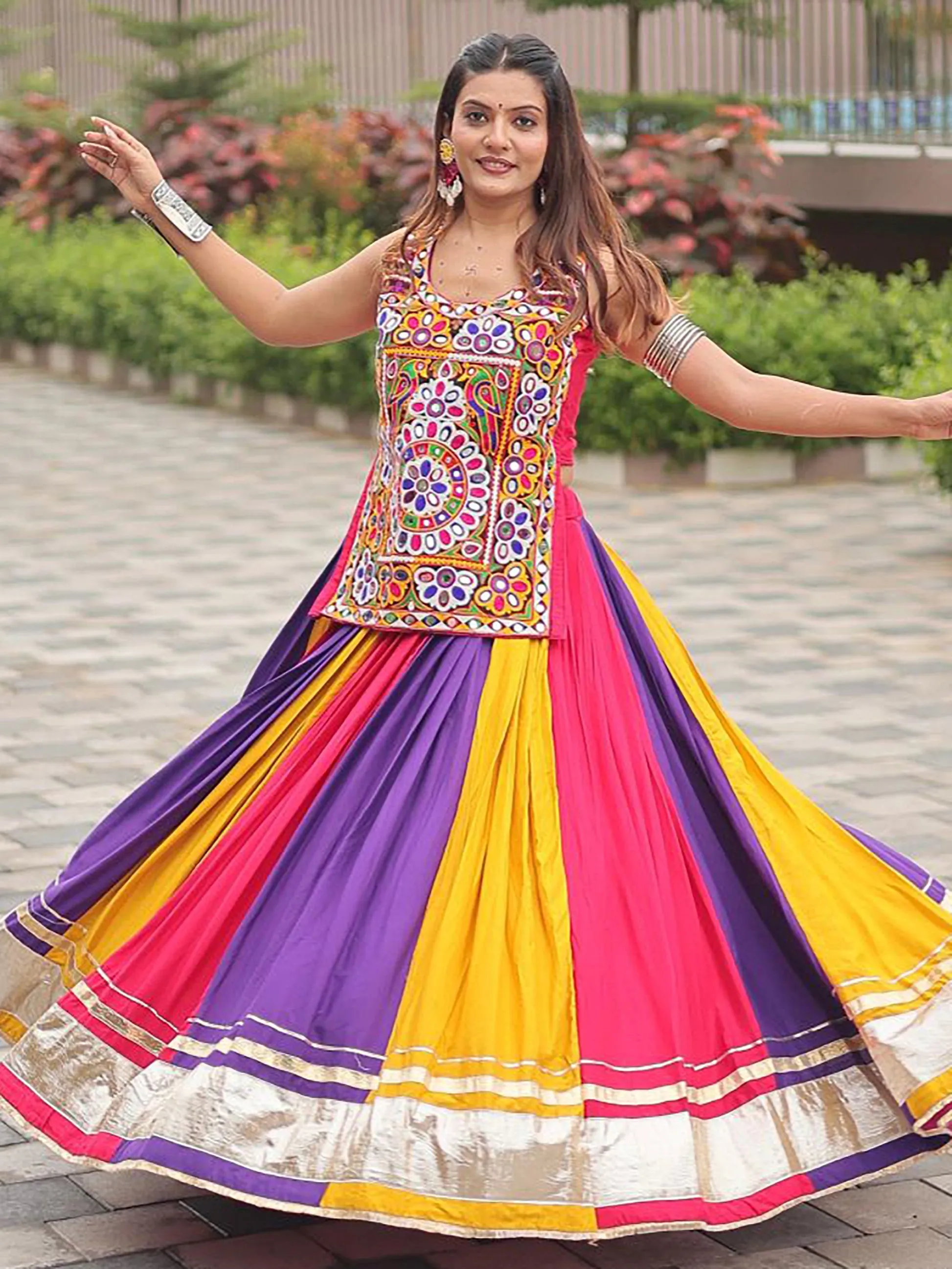
Navratri fashion has a special energy of its own, especially when traditional clothing becomes part of the celebration. A Navratri Chaniya choli brings together vibrant colors, detailed embroidery, mirror work, and graceful silhouettes that feel naturally suited to festive evenings. The outfit can be traditional while still allowing women to choose colors, patterns, and styling details that reflect their individual taste.
The beauty of this ensemble is that it does not depend on one particular design. Some women prefer heavily decorated skirts with colorful dupattas, while others like quieter embroidery and statement blouses. Exploring different combinations makes it easier to create a festive look that feels comfortable, expressive, and appropriate for the occasion.
Exploring Colors That Bring the Outfit Alive
Color plays a major role in Navratri dressing because the celebration itself is associated with energy, movement, and vibrant traditional aesthetics. Bright pink, yellow, orange, green, blue, and red can create an instantly festive appearance, while earthy or jewel-toned shades offer something slightly more understated.
Combining two or three complementary colors can make the outfit feel more interesting without making it visually overwhelming. The skirt can carry the strongest shade while the blouse or dupatta introduces a contrasting color. This approach also gives jewelry and footwear a clearer role within the complete styling.
Choosing Embroidery and Mirror Work Carefully
Decorative work is one of the most recognizable features of festive Gujarati-inspired clothing. Mirror work can reflect light beautifully during evening celebrations, while thread embroidery, beads, sequins, and colorful motifs can add texture. The amount of embellishment should depend on how elaborate you want the complete outfit to feel.
A heavily decorated skirt may work best with a comparatively balanced blouse, especially when the dupatta already contains embroidery. On the other hand, a simpler skirt can support a more detailed blouse or statement border. Thinking about where the eye naturally falls helps create a more organized appearance.
Finding a Silhouette That Allows Easy Movement
Navratri celebrations often involve dancing, walking, and spending extended periods with family and friends, so movement should remain an important part of outfit selection. A flared skirt can create beautiful motion while dancing, but the waistband and overall length should still feel secure and comfortable.
A traditional Navratri lehenga can inspire achieving this balance through familiar silhouettes and detailed craftsmanship. However, comfort should not be overlooked simply because the clothing is intended for festive wear. Choosing suitable fabric, checking the skirt volume, and wearing the outfit with the intended footwear can make the entire experience easier and more enjoyable.
Dupatta Styling Can Change the Whole Appearance
The dupatta is more than an additional layer because its color, fabric, and drape can noticeably change the character of the outfit. A brightly contrasting dupatta can make a simple choli feel more festive, while a matching piece creates a coordinated and traditional appearance. The border can also connect the colors used throughout the ensemble.
Different draping styles can suit different occasions and comfort preferences. Keeping the dupatta over one shoulder allows greater freedom during dancing, while a traditional front drape creates a more classic appearance. Choosing a lighter fabric can also make the outfit easier to manage during longer celebrations.
Jewelry and Footwear Should Match the Energy
Navratri outfits naturally allow more expressive accessories than many other festive looks. Oxidized jewelry, colorful bangles, statement earrings, necklaces, and traditional bracelets can all work beautifully with embroidered clothing. However, choosing a few strong pieces is usually more effective than wearing every decorative accessory together.
Footwear deserves equal attention because the celebration may involve considerable movement. Traditional juttis, embellished flats, or comfortable sandals can complement the outfit while allowing easier dancing and walking. The footwear color can either match one shade from the outfit or provide a subtle metallic accent.
-
Choose jewelry according to the outfit detailing.
-
Keep accessories balanced with heavy embroidery.
-
Select comfortable footwear for dancing.
-
Coordinate footwear with one outfit color.
Conclusion
Traditional Navratri clothing does not have to look identical from one celebration to another. Changing the blouse style, dupatta arrangement, jewelry, hairstyle, or footwear can create a completely different impression while keeping the same basic silhouette. This makes it easier to develop a personal festive style without constantly choosing elaborate new outfits.
The most appealing combinations usually balance tradition with practicality. Colors, embroidery, mirror work, fabric, and accessories should complement one another while still leaving space for individual expression. When the outfit feels comfortable as well as beautiful, it becomes much easier to enjoy the music, dancing, celebrations, and social moments that make Navratri dressing so memorable.
