
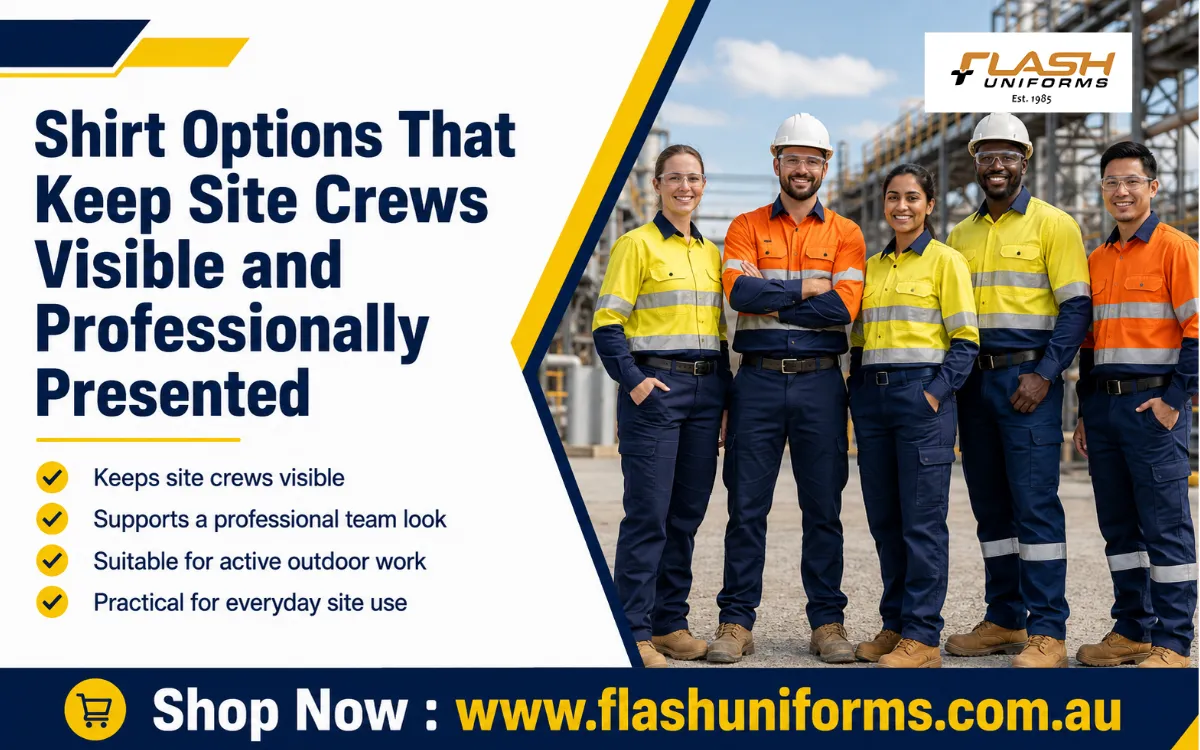
Work shirts are one of the most frequently worn garments on construction sites, warehouses, logistics operations and outdoor workplaces. For organisations using hi vis uniforms, shirts can provide an important combination of workplace visibility, employee comfort and consistent business presentation.
Selecting an appropriate shirt requires more than choosing fluorescent colours. Sleeve length, fabric, fit, ventilation, reflective elements, branding and seasonal conditions can all influence whether the garment performs effectively throughout the working day.
Understand When the Shirt Will Be Used
Begin by assessing the environment.
Questions include:
-
Is work mostly indoors or outdoors?
-
Are employees working in daylight?
-
Are there lower-light periods?
-
Is vehicle movement common?
-
Does the work involve significant physical activity?
-
Are employees exposed to sun?
-
What site standards apply?
Different answers can lead to different garment choices.
Short Sleeves or Long Sleeves?
Both can have practical advantages depending on the work.
Short-Sleeve Shirts
These may offer additional airflow during warmer conditions.
Long-Sleeve Shirts
These can provide additional coverage and may suit workplaces where arm coverage forms part of the required clothing system.
Businesses should base the choice on job conditions and workplace safety requirements.
Fabric Weight Influences Comfort
Site employees can spend hours moving in warm conditions.
A heavy fabric may feel uncomfortable during strenuous activity.
On the other hand, garment durability can also be important.
The goal is to find an appropriate balance between strength and comfort.
Consider:
-
Fabric weight
-
Breathability
-
Ventilation
-
Feel against the skin
-
Drying characteristics
-
Washing requirements
Reflective Elements Need Careful Consideration
Some work environments may require clothing with reflective components.
Businesses should confirm what is appropriate for their workers and sites.
If reflective elements are included, employees should follow garment care instructions because repeated wear and inappropriate laundering may affect their condition.
Explore Custom Shirt Options
Businesses seeking branded visibility-focused garments can review custom high vis shirts when developing a consistent appearance for site crews.
Adding company branding can help workers remain recognisable while keeping the garment aligned with the organisation’s identity.
Common Branding Locations
Potential areas include:
-
Left chest
-
Right chest
-
Sleeve
-
Upper back
Logo placement should work around reflective features, pockets and seams.
A Professional Look Still Matters on Site
Safety-focused clothing can also contribute to how customers perceive a business.
Tradespeople may visit:
-
Residential properties
-
Commercial facilities
-
Construction projects
-
Client offices
-
Public areas
Clean, coordinated shirts with consistent branding can help employees look organised when interacting with customers and other contractors.
Fit Affects Movement
Site workers need freedom to move.
Employees may regularly:
-
Lift
-
Bend
-
Reach
-
Climb
-
Kneel
-
Carry equipment
A shirt should accommodate these movements without excessive pulling or restriction.
Consider different fits and sizes for a diverse workforce.
Pockets Should Be Functional
Work shirts often include chest pockets.
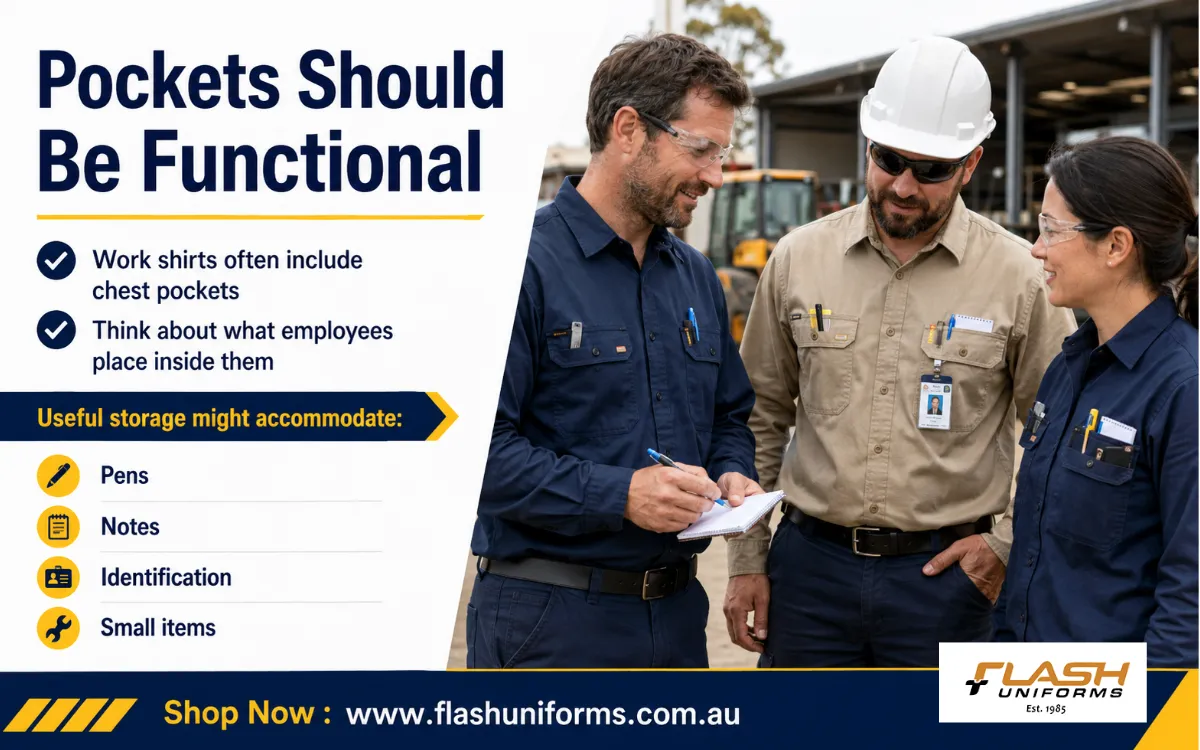
Think about what employees place inside them.
Useful storage might accommodate:
-
Pens
-
Notes
-
Identification
-
Small items
However, pockets should not interfere with branding or reflective features.
Plan for Seasonal Layers
A visibility shirt may be ideal during warm weather, but workers will need additional clothing in winter.
A complete system can include:
Base
Visibility shirt.
Mid Layer
Approved jumper or hoodie.
Outer Layer
Suitable visibility-focused jacket where required.
The outermost visible garment should be considered as part of workplace clothing planning.
Provide Enough Shirts
Site workers may soil garments quickly.
Providing enough shirts for rotation makes regular cleaning easier.
The appropriate number depends on work schedules and washing arrangements.
Businesses should avoid creating a system where employees feel they must repeatedly wear the same dirty garment because replacements or rotation items are unavailable.
Develop Care Guidelines
Every garment should be maintained according to its instructions.
Businesses can provide a simple guide covering:
-
Washing
-
Drying
-
Inspection
-
Storage
-
Reporting damage
Employees should avoid modifying garments in ways that could affect their intended workplace use.
Replace Clothing When Necessary
Work shirts naturally deteriorate over time.
Managers should watch for:
-
Fading
-
Tears
-
Failed closures
-
Damaged reflective materials
-
Permanent staining
-
Excessive wear
Regular replacement helps support both functionality and professional presentation.
Keep Branding Consistent
If employees receive replacement shirts at different times, branding specifications should remain standardised.
Keep records of:
-
Logo artwork
-
Colours
-
Size
-
Position
-
Decoration method
This reduces variation between orders.
Involve the Workforce
Employees can provide valuable feedback.
Ask several workers to trial garments before ordering for a large team.
Feedback might reveal:
-
Excessive heat
-
Restricted shoulders
-
Poor pocket positioning
-
Incorrect sizing
-
Sleeve discomfort
-
Care difficulties
Addressing these issues early can improve acceptance across the workforce.
Why Choose Flash Uniforms?
Flash Uniforms offers Australian businesses access to work shirts, visibility-focused apparel and custom workplace clothing across several established brands. Businesses can compare shirts alongside complementary trousers, jackets, vests and other layers, making it easier to build a coordinated clothing program rather than purchasing each item independently. Custom decoration options can also support consistent business identification across the team.
Final Thoughts
A good site shirt should support the worker throughout the day while contributing to a professional team appearance.
Consider visibility requirements, fabric, movement, sleeve length, branding and seasonal layers before ordering.
The most successful hi vis uniforms are systems rather than single products.
When shirts work comfortably with the rest of the employee’s wardrobe and are maintained properly, businesses can create a more consistent approach to site clothing across different roles and seasons.
